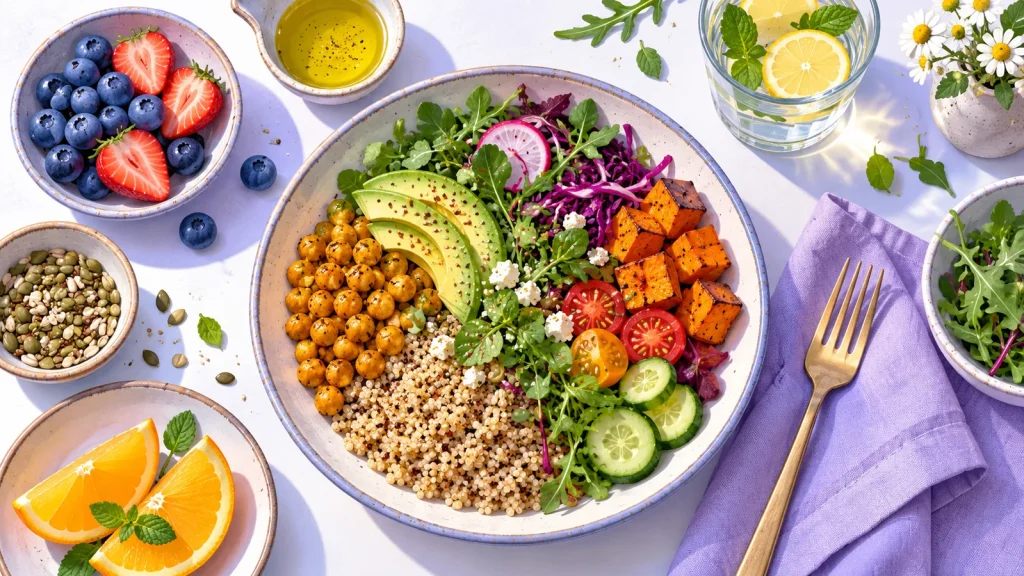
A practical PCOS food plan should fit your life, not require you to replace every familiar meal. There is no single diet composition proven best for everyone with PCOS. The useful question is how to build an approach you can afford, enjoy, and adapt to your own needs.
This guide offers meal-planning examples and a way to use Cycle Bloom Pal’s meal and food-scanning features thoughtfully. It does not set calorie targets, prescribe a diet, or promise to change your hormones in a set number of days.
Start with flexibility rather than a banned-food list
The international PCOS/PMOS guideline supports sustainable eating based on individual preferences and goals, and cautions against unnecessarily restrictive or unbalanced diets.
Before adopting a plan, ask whether it accommodates your medical needs, cultural foods, cooking access, budget, and preferences. A plan that depends on expensive ingredients or daily cooking may be a poor match for someone with a long commute and a shared kitchen.
Specific allergies, coeliac disease, diabetes, pregnancy, kidney disease, or a history of eating difficulties can change what advice is appropriate. A registered dietitian or qualified clinician can help tailor decisions. A generic article should not overrule that support.
A flexible meal-building framework
The NHS Eatwell Guide includes vegetables and fruit, starchy carbohydrates, protein foods, and dairy or alternatives as part of overall dietary balance. It also notes that balance is considered across a day or week, rather than requiring every meal to be identical.
For everyday planning, ask: what is the main meal, what will help make it satisfying, and what ingredients are realistically available? The examples below are options to adapt, not prescribed portions or a treatment menu.
| Starting point | Possible addition | Practical advantage |
|---|---|---|
| Rice or another familiar grain | Beans, tofu, fish, chicken, or another preferred protein, plus vegetables | Uses a meal you already know |
| Toast or flatbread | Eggs, hummus, or another suitable topping and a fruit or vegetable | Works with a short preparation window |
| Soup | A preferred protein ingredient and bread or another accompaniment | Can be planned around what you have |
| A takeaway meal | A side or adjustment that suits your appetite and needs | Avoids treating a busy day as a failed day |
There is no need to label these combinations as a perfect “PCOS plate.” The point is to have a repeatable way to make a choice, then adjust with professional input when needed.
Plan for your difficult day, not your ideal day
Think of the day when meetings overrun, a train is late, or you do not want to cook. What could you reasonably eat then? Build one backup around shelf-stable, frozen, ready-to-eat, or easy-to-assemble foods that suit you.
For example, you might keep ingredients for a quick bean-and-rice meal, or identify a convenient lunch option near work. The useful feature is availability, not a particular ingredient being medically special.
Write a shopping list from two or three meals you actually intend to eat. Check what is already in the kitchen before adding new foods. This can turn planning into a small decision rather than a full redesign of your week.
Using Cycle Bloom Pal’s meal ideas
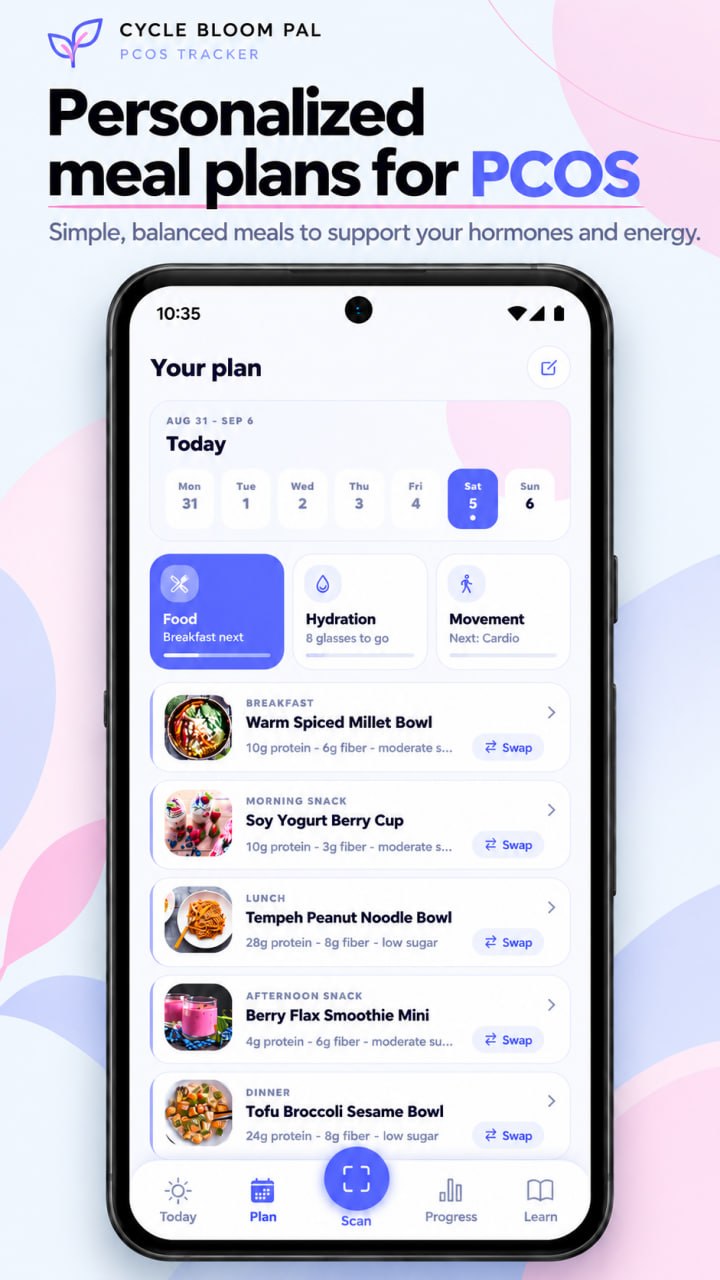
Cycle Bloom Pal offers meal-planning support and swap options. Treat a suggestion as a starting idea, then check whether it fits your preferences, ingredients, allergies, and any advice you have received.
One low-effort approach is to choose a single meal to organise first. Review the suggestion, make a suitable swap if needed, and decide when you could prepare or obtain it. You do not have to follow a full plan to benefit from having one decision ready.
If a suggestion does not fit, that is information about the suggestion, not a reason to ignore your own needs. Adjust the plan or leave it. The app should support your food decisions rather than act as a strict rulebook.
What a food scan can—and cannot—tell you
A scan can provide estimated nutrition information and prompts to consider. A photograph cannot reliably reveal every ingredient, cooking fat, sauce, or exact portion. Read the output as an estimate and correct the entry when you know more.
For a packaged product, compare the result with the label. For a mixed meal, acknowledge uncertainty rather than turning a single grade into a verdict on the meal. A food score does not measure your glucose response or tell you whether you are managing PCOS “correctly.”
Never use a photo estimate for insulin dosing or a decision that requires precise intake. Follow your healthcare team’s method for those situations. You can read more about the distinction in our insulin resistance guide.
Keep observations neutral
If you choose to keep meal notes, describe what was useful or difficult: “This lunch was easy to pack,” “I did not have access to a kitchen,” or “The portion in the photo was larger than the estimate.” These notes can help you improve a routine without assigning moral labels to food.
Do not infer a clinical cause from a single day. Feeling different after one meal does not establish that a food caused a symptom. If you suspect a recurring problem, discuss it with an appropriate professional before removing entire food groups.
If tracking makes eating more anxious, restrictive, or guilt-driven, simplify or pause food logging and ask for support. You can still use the app for cycle notes or education without recording meals.
A small experiment in organisation
- Choose one meal that regularly becomes stressful.
- Write down what makes it difficult: time, ingredients, cost, or uncertainty.
- Pick one possible solution, such as preparing an accompaniment or keeping a backup ingredient.
- Try it on an ordinary day.
- Review whether it made the meal easier, without treating it as a test of your hormones.
Success could mean that you had a workable lunch when you needed it. It does not require a changed weight, a higher nutrition score, or a strict streak.
Where to go next
Our PCOS myths article covers common all-or-nothing claims. The seven-day app routine shows how to start with only a few features.
Explore Cycle Bloom Pal for Android if meal ideas and a place for notes would help you organise your week. This article offers general examples, not personalised nutrition advice or a diet to treat PCOS.